

Start with us, grow with us
Develop specialist expertise. Take on real responsibility. Build a career that makes a difference.
Applications for our 2027 cohort will be open on 9 October 2026 until 26 October 2026.
Recognised as a leading graduate employer

Join us to shape the nation’s future while building your own.
Gain financial security, expert training from a world leading tax authority, and the pride of funding vital public services.
Now is the best time to join HMRC’s Tax Specialist Programme (TSP). Imagine stepping into a role where your analytical skills and intellect are challenged daily, where the decisions you make directly fund essential services that millions depend on, where you’re provided with stability and clear career progression. That’s what you can expect when joining our Tax Specialist Programme.
Here, your growth isn’t just a possibility, but a guarantee, mapped out from day one!

What you need to know
Applications
Applications are now closed for the 2026 cohort, and will re-open for 2027 on 9 October 2026.
Entry requirements
- Expected to receive a 2:2 university degree or equivalent by September 2027. Existing civil servants do not need a degree to apply.
- No prior tax knowledge required.
- Have the right to work in the UK (we are unable to provide visa sponsorship)
Find out if you are eligible to work here by reading the Civil Service nationality rules.
Locations
14 regional centres across the UK.
Salary
Starting salary minimum of £37,682 (£42,631 in London). Upon successful completion, you’re guaranteed a promotion to a minimum of £58,541 (£65,869 in London).
A place where people matter, and futures grow
Show video transcript
- [Text on screen: Tax Specialist Programme]
- [Kyra, Tax Specialist Trainee, HMRC] Hi, I’m Kyra.
- [Baljinder, Business Learning Manager, HMRC] Hi, I’m Baljinder.
- [Zain, Tax Specialist Graduate, HMRC] Hi, I’m Zain.
- [Connie, Tax Specialist Trainee, HMRC] Hi, I’m Connie and I'm in the first year of the Tax Specialist Programme.
- [Kyra] I'm currently in my second year of the Tax Specialist Programme.
- [Zain] I recently completed the Tax Specialist Programme and now work as a VAT Specialist.
- [Kyra] I specialise in international tax and my week is about customer interactions and dedicated study days where I have tutorials and coursework to do. I joined straight out of university after getting a literature degree, so I'm living proof you definitely don't need to know anything about tax before you join.
- [Connie] I really enjoy that the work we do on the programme aligns perfectly with the learning and I can apply what I've learned to real life situations.
- [Zain] The learning aspect of the Tax Specialist Programme was challenging due to the extensive technical knowledge required. However, I've overcome this by building relationships with colleagues who are always willing to share their expertise.
- [Baljinder] The course covers different types of tax and how to deal with customers, with tutorials and manuals guiding your learning.
- [Kyra] Initially, stepping into the world of tax in HMRC was daunting, but the warm welcome I received made all the difference.
- [Connie] But the role isn't without its challenges. Speaking to customers can be difficult, especially when I have to challenge them about potential problems with their tax records. However, there are always managers and technical consultants available to support me if I need it.
- [Kyra] The community here is fantastic, and there's always someone to turn to for advice or expertise with your work.
- [Connie] The thing that makes me most proud is knowing that I've helped customers pay the right tax at the right time.
- [Kyra] I've been able to play an active role in the Women's Health Steering Group, where we focus on educating and raising awareness about women's health issues and their impact in the workplace.
- [Zain] VAT contributes over £100 billion annually to public services that benefit everyone, so I'm really proud to play a part.
- [Connie] I've learnt how complex tax can be, so it feels great to use my new expertise to benefit the public.
- [Kyra] After you finish the programme, there's lots of different career pathways you can follow. You could either develop your existing knowledge or apply to work in a different tax area.
- [Baljinder] If you think you have what it takes to join the Tax Specialist Programme, apply today on Civil Service jobs.
- [Text on screen: People. Purpose. Potential.]
Your tax specialist journey begins here
HMRC’s Tax Specialist Programme (TSP) offers a unique opportunity to develop your skills and become an expert in tax. It’s a 3-4 year training scheme, where you’ll be working on tax cases while also studying for exams.
Whether you’re a university graduate or an existing civil servant, this programme is designed to challenge and reward you, giving you the tools to handle complex tax issues and influence some of the most important financial decisions in the UK.
Developing the next generation of Tax Specialists
Through hands-on training led by world-class tax experts, you’ll develop specialist skills that directly fund vital public services while building a rewarding career.
From an early stage you’ll be responsible for your own portfolio of tax cases, dealing directly with customers who want to get their tax affairs right but need help, as well as those deliberately getting it wrong. This work will include challenging conversations with customers in person, by phone and video call.
You’ll develop the confidence to work with a wide range of people, build professional relationships and interact with senior business figures through a blend of virtual and face-to-face communication.
Beyond professional development, you’ll have the opportunity to attend regular social events, join volunteering opportunities, and take advantage of flexible hybrid working that allows you to craft your week strategically.
Our programme is challenging and requires hard work and dedication, and many trainees find it highly rewarding. With the right level of resilience, organisation and commitment, you’ll develop value skills and gain significant professional experience.
It’s this combination of exceptional training and meaningful social impact that makes the TSP a standout graduate programme choice.
Are you the ideal candidate?
We’re looking for enthusiastic individuals who are independent thinkers, strong problem solvers, proactive, resilient, adaptable and comfortable with having challenging conversations. Integrity, professionalism, and a commitment to our core values are a must.
If you think you’ve got what it takes, we’d love to hear from you!

“I came in knowing absolutely nothing about tax. The programme is designed to support your learning from day one, which has helped me build a solid foundation in a completely new field.”
Mahnoor, 1st year TSP trainee

“The programme is challenging but in a way that keeps me engaged and motivated. I was pleasantly surprised by the amount of help and support available.”
Elijah, 1st year TSP trainee
Why choose HMRC?
HMRC is one of the UK’s largest organisations, with around 67,000 employees, collecting over £966.4 billion in tax revenue.
At HMRC we are committed to helping our customers get their tax right. By making it easy for people to get tax right, and robustly tackling those who cheat the system, we run a fair and effective tax system, collecting the money for the UK’s public services, and giving financial support to people.

Making an impact
Tax funds everything the government does, from hospitals and schools to police and defence. We’re responsible for collecting taxes and duties from over 50 million people and five million businesses. We also administer various essential programmes, such as Child Benefit, Tax-Free Childcare, Statutory Pay, and Tax Credits. Our work includes protecting citizens through initiatives like enforcing the National Minimum Wage and Living Wage.

Transforming together
HMRC is going through an exciting time as we undertake a major transformation to modernise our organisation and deliver even better services to our customers. We’re embracing cutting-edge technology to make our jobs more efficient and connect us all. Our incredible journey is only possible with the support of our amazing team – that’s you!

A world of opportunities
At HMRC, we offer not just a job, but a rewarding career filled with challenges and opportunities. We’re committed to creating an inclusive environment where everyone, regardless of their background, feels respected and valued. Our priority is to ensure that every colleague at HMRC has a voice, feels safe, and can thrive.
Your career path as a tax specialist at HMRC
As part of HMRC’s Tax Specialist Programme, you’ll join our team of highly skilled tax professionals and tackle the most challenging aspects of compliance work. You will be working with customers to ensure HMRC is receiving the right tax at the right time. This will include raising assessments, reaching settlements, issuing repayments, and charging interest and penalties on any unpaid tax. You’ll play a vital role in collecting the money that powers public services.

Welcome to HMRC and begin your immersive induction into the Tax Specialist Programme.
You’ll meet your cohort of fellow trainees and be introduced to your manager and trainers who will guide you throughout your journey.
You’ll also start understanding your role within HMRC in helping customers pay the right tax at the right time whilst being required to work a hybrid working week with at least 60% of your time in the office.
In the first 18 months, you’ll build the foundations of your role, learning how to investigate tax issues and help customers get their tax right. Through hands-on training led by HMRC’s in-house experts, you’ll develop and practise the key skills and knowledge needed to succeed.
You’ll experience a blend of dynamic virtual sessions and face-to-face interaction, where you’ll learn new concepts and put them into practice.
From an early stage, you’ll be responsible for your own portfolio of live tax cases – investigating tax issues, writing to customers and conducting face-to-face or phone meetings.
This is the first stage of the 2-stage training programme where you’ll complete assessments testing both your knowledge and practical skills.
Ultimately, you’ll be provided with the knowledge, skills, and support to build your skills and confidence so you can achieve the required standard.
What to expect in Stage 1 of the Tax Specialist Programme
Show video transcript
- [Text on screen: Stage 1 of the Tax Specialist Programme. What to expect]
- [Chris, Stage 1 Lead, Tax Specialist Programme, HMRC] Hello, I’m Chris, and I’m here to talk to you about HMRC’s Tax Specialist Programme or TSP for short. I lead stage 1 of the programme here in Birmingham, overseeing its delivery and supporting trainees through the first 18 months of the course. Before that I was a Business Learning Manager, also on the TSP. The TSP is HMRC’s flagship training programme for developing future senior tax professionals. Most trainees who undertake the course go on to work in customer compliance, handling complex tax cases. It is a demanding course, but if you complete it successfully, you’ll be promoted to Grade 7, which is a senior role in HMRC. Let’s take a quick look at what stage 1 involves and some of the challenges that trainees face early on in the course.
- [Text on screen: Your first week]
- [Chris] Your first week you’ll start with an HMRC induction. You’ll meet the TSP team, including your Business Learning Manager, and you’ll get familiar with your timetable. You’ll be given some course materials and you’ll be introduced to the Quality Assurance Framework.
- [Text on screen: Your first month]
- [Chris] In your first month, you’ll begin studying self-assessment and bookkeeping. You’ll take part in a local training exercise, learning all about how to work a compliance case, and you’ll also have your first 1-2-1 with your Business Learning Manager. The 1-2-1’s happen each month and are a good opportunity for you to get to know your Business Learning Manager, and for them to check on your progress and your wellbeing, and make sure that everything’s going to plan and that you’re on the right track.
- [Text on screen: Your first year]
- [Chris] In your first year, you’ll cover some further key tax topics. You’ll complete a couple of check and challenge assessments, which are assessments designed to test your learning up to that point in the course, and you’ll work some customer cases and continue to apply your learning with operational casework. You’ll conduct visits, you’ll be writing to customers, and you’ll be reflecting on your journey in your Quality Assurance Framework, which you will submit for review in February and in July.
- [Text on screen: Completing stage 1]
- [Chris] In the final six months of stage 1 you’ll study capital gains tax and you’ll also complete a case study role simulation, which is a further assessment designed to test all of your knowledge up to this point on the course. You’ll continue working your operational cases, hopefully through to resolution, and your Quality Assurance Framework will be submitted for marking in November. In March of the following year, you will submit your Quality Assurance Framework for final stage 1 sign off and if successful, you’ll then move to your business stream in April and onto stage 2 of the TSP.
- [Text on screen: Challenges and support]
- [Chris] I’m going to talk to you now about some elements of the programme that you may find a little more challenging at times. Organisation. The course starts gently and then builds. Managing the three main strands of the course: your learning, your compliance casework, and your Quality Assurance Framework can be a little tricky. There are deadlines that are expected to be met. Continual assessment. There are check and challenge assessments that must be passed for each subject covered, and your general progress is assessed at regular intervals. And compliance casework. Undertaking compliance visits and customer calls can feel a little daunting for some trainees to begin with. So with those challenges in mind, I’m just going to talk to you a bit about some of the support that’s available. When you join TSP, you’ll be allocated a Business Learning Manager or BLM. They will be both your manager, but they will also be there to support you through your whole learning journey. You’ll be working with a group of tax professionals who can support you with your casework, and the initial visits that you undertake will be accompanied. Peers from earlier cohorts will also be a great source of support, having been through a lot of the things that you’re going through themselves. As well as this, as an employee of HMRC, you’ll have access to a whole network of support available.
- [Text on screen: People. Purpose. Potential.]
After the 18-month foundational learning, you’ll be assigned to a business area and spend the remainder of your training working on a specific area of tax such as Income Tax, Corporation Tax, VAT, Employment Duties or Customs, further developing your technical skills and knowledge. You’ll learn to resolve tax disputes, interact with senior business figures, and tackle complex tax issues through real tax cases.
You’ll continue completing all elements of this second stage, including formal and work-based learning assessments, as you work towards becoming an effective Tax Professional.
The Tax Specialist Programme can take between 3 years 3 months and 4 years to complete.
What to expect in Stage 2 of the Tax Specialist Programme
Show video transcript
- [Text on screen: Stage 2 of the Tax Specialist programme. What to expect.]
- [Katherine, Stage 2 Business Learning Manager, Tax Specialist Programme, HMRC] Hi, I’m Katherine. I’m a Stage 2 Business Learning Manager based in Birmingham. I’m here to talk about the second half of the TSP course or stage 2. This will take you from streaming up until promotion and generally takes about 2 years.
- [Text on screen: What is stage 2?]
- [Katherine] After about 18 months on the course, you will move out of stage 1 of the TSP and move into what is effectively a Grade 7 role within the department. This will normally put you into a caseworking role in departments such as Large Business, Wealthy and Mid-Sized Business, Individual and Small Business, or Counter Avoidance. You could also move into a technical role in departments such as Legal Group or Business Assets and International. But this is much less common. Where you stream will also determine which course of learning you’ll complete. This could be Corporation Tax, Personal Tax, VAT or Employer Duties.
- [Text on screen: Challenges and expectations]
- [Katherine] There are some aspects of stage 2 of the programme that you may find more challenging. The transition to your new role can take time to adjust to, as there is an expectation that you will make decisions independently and drive complex work forward at a Grade 7 level. The learning and assessments will also increase in complexity during this stage. There’ll be an increased expectation on you to act as a leader, and to be visible and engaged within the team that you’re in. And the last stages of TSP are often very busy as you push towards promotion. You will need to juggle having a full Grade 7 workload while finishing your exams.
- [Text on screen: Support during the programme]
- [Katherine] Although there are challenging aspects to TSP, there is plenty of support available throughout the programme. You’ll have a Business Learning Manager to support you when needed, and depending on your line of business, you may have a work manager or mentor too. Tax professionals in your streamed line of business are also a great source of support. Many of them will have completed TSP and understand your needs.
- [Text on screen: Promotion to Grade 7]
- [Katherine] As long as you successfully complete the programme, you are guaranteed promotion to a Grade 7 role as a fully trained tax specialist. If you have any further questions about the Tax Specialist Programme, please contact the TSP Recruitment Team.
- [Text on screen: People. Purpose. Potential.]
On successful completion of the Tax Specialist Programme, you’ll receive automatic promotion to a Senior Tax Specialist role, with a minimum salary of £58,541 (£65,869 in London). This role offers pathways for continued advancement across HMRC.
The application process
Each stage of our application process builds towards identifying candidates who will thrive in our comprehensive training programme and develop into skilled tax professionals. We’re committed to fair and inclusive recruitment, ensuring every candidate has the opportunity to demonstrate their potential regardless of their background and tax knowledge.

First, you’ll be asked to enter some basic information about yourself and complete our application form through Civil Service Jobs.
You’ll then be invited to take two tests: verbal and numerical.
If successful, you’ll be invited to complete a Civil Service Judgement Test which will assess your capability and strengths.
All these tests focus on the skills and confidence essential for tax specialist work, helping us understand how you process information and approach problem-solving.
Successful candidates from the online testing stage will be invited to complete the Civil Service Styles Assessment. This online assessment explores your work behaviours and preferences, helping us understand how you typically approach different workplace situations.
The assessment measures behaviours that are important for success in the role and provides insight into the strengths and ways of working you would bring to the Tax Specialist Programme.
If successful at the Civil Service Styles Assessment, you’ll be invited to attend our half-day face-to-face assessment centre, which provides the most comprehensive evaluation of your potential as a Tax Specialist.
Successful candidates will be placed on a merit list and offered positions in order of merit and preferred location.
Read blogs from our trainees
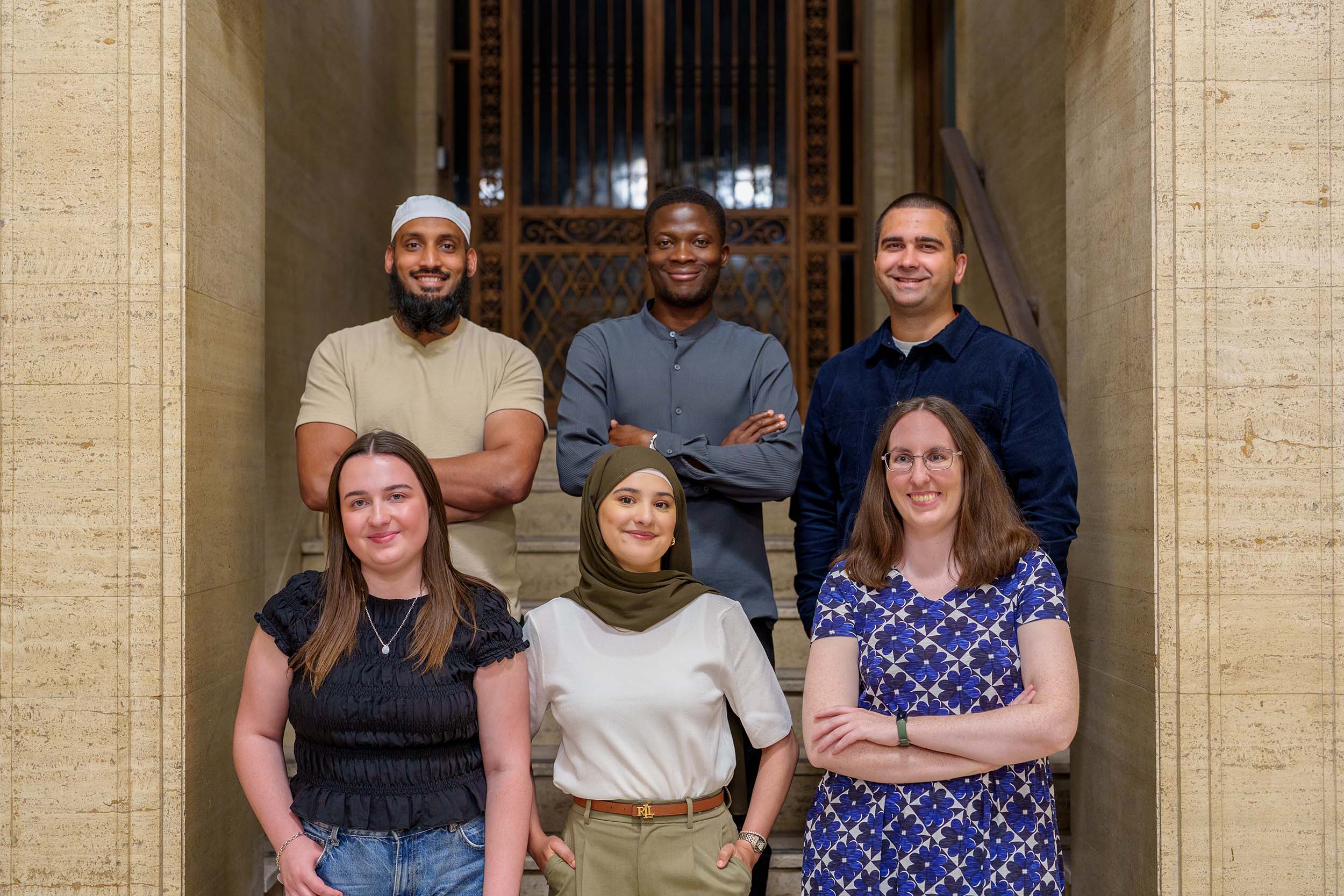
Day in the life of a first-year TSP trainee

Challenges and surprises on the TSP

TSP trainees’ best advice for applicants

Shannon’s journey: Reflections from a TSP trainee
Trainee testimonials
“The great positive surprise upon starting TSP has been how early you are trusted to do live tax cases. Within months of beginning the programme, I was writing out to my first customer. I’ve really enjoyed this early responsibility.
I have also been most impressed by how inclusive everyone is. I worried I would stand out as an older trainee, but everyone from ages 22 to early 50s (and beyond) is within the cohort.”
Will, 1st year TSP trainee
“It’s rewarding to gain confidence in your role, and because the course is challenging, you can clearly see your own development, even over short periods of time.
My greatest achievements often come from interactions with customers, helping them better understand their tax affairs and giving them confidence in the next steps.”
Holly, 1st year TSP trainee
“A pleasant surprise has been the people. Everyone is supportive, approachable and willing to help each other. I’ve also been fortunate to work with colleagues and managers who are always willing to answer questions, provide guidance and support my development.
The working environment has been far more collaborative and supportive than I expected.”
Lea, 1st year TSP trainee
Frequently Asked Questions
Programme structure and training
What qualifications do I need to apply for the Tax Specialist Programme?
External candidates need a minimum 2:2 degree in any subject. We welcome applications from all degree disciplines, you don’t need a background in accounting, economics, or finance. For existing civil servants, no degree is required.
Is the programme professionally recognised?
Yes, the Tax Specialist Programme is industry-recognised with HMRC as a world-leading tax authority. While the programme doesn’t provide external accreditation, it delivers comprehensive tax expertise that is highly regarded throughout the industry. The skills and knowledge you gain are directly applicable to solving challenging tax issues and investigations and are valued both within HMRC and across the wider tax profession.
What training will I receive during the programme?
You’ll experience an immersive learning journey led by HMRC’s in-house experts through a blend of dynamic virtual sessions and face-to-face interaction. The training combines theoretical knowledge with practical application, allowing you to develop specialist skills through hands-on tax investigations and enquiries. You’ll work with expert trainers who will guide you as you progress, with structured learning designed to build your technical expertise and leadership and professional skills.
What is the expected study commitment for the TSP?
The TSP is a demanding programme that combines study, assessments and live tax cases, requiring resilience, organisation and commitment. Throughout the programme, you’ll balance formal learning, exam preparation and practical real tax cases, developing your knowledge through tutor-led sessions, independent study and real-world application.
While the programme is challenging, many trainees find the experience highly rewarding. You’ll be supported by experienced tutors, Business Learning Managers and your fellow trainees.
From an early stage, you’ll work on real cases – analysing complex issues, progressing investigations and communicating with customers (face-to-face and over the phone).
It’s the combination of challenge, support and meaningful work that makes the TSP a unique and rewarding graduate programme.
How are TSP trainees assessed throughout the programme?
Assessment is a key part of the Tax Specialist Programme and takes place throughout the course. During the first 18 months (stage one), trainees complete a series of Check and Challenge assessments with their manager. These are based on the topics being studied and provide an opportunity to show what they’ve learnt and track progress as trainees develop their technical knowledge.
In the second 18 months of the programme (stage two), the focus shifts to formal exams, which assess the knowledge and skills developed throughout the training. The assessment schedule means there are regular opportunities to demonstrate progress, that’s why it’s important to stay engaged with both the learning and study elements of the programme.
Career progression and benefits
What is the starting salary for the programme?
The TSP offers an above-market starting salary of a minimum of £37,682 (£42,631 in London). This competitive compensation reflects the value we place on our tax specialists from day one.
What is the career progression path after completing the TSP?
Upon successful completion of the programme, you’re guaranteed promotion into a Senior Tax Specialist role (Garde 7) with a salary of £58,541 (£65,869 in London), where you’ll continue developing specialist expertise and building your career within HMRC’s tax profession.
What work-life balance and other benefits can I expect during the programme?
HMRC is fundamentally an office-based organisation and while the role is not suitable for homeworking there is scope to work flexibly with the opportunity to work remotely 2 days a week as part of the opportunity to foster a sustainable work life balance.
We also offer 5 days of volunteering opportunities annually, family-friendly policies, and a supportive environment that recognises the importance of life outside work. Our comprehensive benefits package supports genuine work-life balance while still providing the structure and social connection that helps trainees thrive.
Can I join and work part-time hours?
The programme can be completed on part time hours, and the minimum number of hours prior to any agreed reasonable adjustments is 28 hours per week. If you would like more information on this or have other general enquiries, please contact tsprecruitmentteam@hmrc.gov.uk.
Application process
What does the application process involve?
The application process consists of several stages. See details of the stages higher up on this page. Each stage is designed to identify candidates with the potential to succeed in the programme, regardless of their background or previous tax knowledge.
Do you offer visa sponsorship?
No, you are only eligible to apply for the Tax Specialist Programme if you satisfy both the nationality and right to work/Immigration requirements.
Nationality requirements (Civil Service nationality rules)
This job is broadly open to the following groups:
- UK nationals
- nationals of Commonwealth countries who have the right to work in the UK
- nationals of the Republic of Ireland
- nationals from the EU, European Economic Area (EEA) or Switzerland with settled or pre-settled status or who apply for either status by the deadline of the European Union Settlement Scheme (EUSS)
- relevant EU, EEA, Swiss or Turkish nationals working in the Civil Service
- relevant EU, EEA, Swiss or Turkish nationals who have built up the right to work in the Civil Service
- certain family members of the relevant EU, EEA, Swiss or Turkish nationals
Further information on nationality requirements
You must have the right to work in the UK and meet the Immigration and Visa requirements on the GOV.UK Visas and Immigration page.
When do applications open for the 2027 Tax Specialist Programme?
Applications for the 2027 Tax Specialist Programme will open on 9 October 2026. We recommend following @HMRCcareers on social media or signing up for job alerts on Civil Service Jobs to receive notifications as a reminder for when the applications open.
I am an existing civil servant – do I need a degree to apply?
No, existing civil servants do not need a degree to apply. Your hands-on experience is as valuable as a degree. In our 2026 campaign, over 45% of successful candidates were internal applicants. The TSP offers a structured path to Grade 7 that recognises and builds on your existing expertise, regardless of your educational background.
Do I need prior tax knowledge to apply?
No prior tax knowledge is required. We’re looking for candidates with strong analytical thinking, good communication skills, and the potential to develop into tax specialists. The programme is designed to provide you with all the technical knowledge you need, building from the fundamentals to advanced tax concepts. What matters most is your willingness to learn and your ability to apply new information to solve problems.
Do you offer adjustments for candidates with a disability, long-term condition, or illness/injury?
Yes, we do. We are a Disability Confident Leader and we’re committed to making our recruitment process inclusive and accessible to everyone.
We offer reasonable adjustments to support candidates who may face barriers due to a disability, long-term health condition, illness or injury. These are changes to the recruitment or working environment that help remove or reduce disadvantages, so all candidates have a fair opportunity to demonstrate their potential and thrive in their role.
We are committed to making reasonable adjustments that support individual needs, in line with the Equality Act. Each request is thoughtfully considered on a case-by-case basis to ensure fairness and accessibility for everyone.
Examples:
- Some individuals with dyslexia may benefit from additional time to read or write, to support the processing of information more comfortably and confidently.
- People with visual impairments may find larger text or alternative formats more accessible.
- Individuals with physical disabilities might need longer or more frequent breaks to stretch or move.
We’ll have a conversation with you if you reach the assessment centre stage, regarding reasonable adjustments, and we’ll work with you to ensure you are supported appropriately.
If you’re successful at assessment centre and are offered a position, you can request necessary workplace adjustments both before beginning the programme and throughout your career.
Start a career that grows with you at HMRC
Join the Tax Specialist Programme and thrive in a work culture that celebrates your whole self.
Applications are opening on 9 October 2026.
Start your HMRC journey today by looking at the vacancies we have available.
Discover more about what we do, our business areas and life at HMRC.
Ask our employees questions for an insight into what it’s like to work at HMRC.