
What our people say about working for Maritime and Coastguard Agency (MCA)
Maritime operations and ship safety
Finance and corporate support
Peter Boden, Cargoes Policy Lead
Why did you choose the MCA?
I had been considering various Government roles and also looking at working nearer to the South Coast, which is where I was born and grew up and still have family, after many years in both London and overseas in Asia. Given my previous background and experience in liner shipping, maritime law and marine insurance the possibility to join the MCA in Southampton was a good fit.
What is the most exciting part of your job?
The possibility to make a positive impact and play a small part in tackling some of the biggest challenges facing humanity in the 21st century, namely environmental, is surely worth getting excited about.
What do you enjoy most about the work you do?
I have always had a connection in one way or another to the sea, as have my family through the generations. Shipping is one of the oldest continuous activities in the world and is often under the radar and poorly understood by the general public. By its very nature shipping has been multicultural and unifying for centuries. As the sea is a potentially hazardous environment, cooperation between peoples and nations is inevitable and the maritime community continues to have a unique spirit of togetherness which cuts through individualistic political agendas. The chance to work internationally with other Administrations through the IMO, the only United Nations body located outside of Mainland Europe or North America, is also quite unique and special.
What does your average working day look like?
As with many workplaces, a lot of communication is electronic these days through emails as well as the use of video calling. Modern IT equipment combined with the support of the MCA’s IT services means that a lot of our work can be delivered remotely from an internet connection if necessary. However, regular in person catch ups are also an important part of our Team’s coordination of tasks, development of ideas, swapping of advice and general wellbeing.
What is your background and how has this helped you in your current role?
I was born in Sussex, went to school in Hampshire and read Oriental Studies at Oxford as an Undergraduate. After university I spent several years working in Australia and China both in-house for a shipowner handling claims and managing liner trades through the South Pacific as well as at specialist marine insurance mutuals (P&I Clubs) managing claims and underwriting. Having completed the Graduate Diploma in Law in the UK (aka law conversion course) and having also undertaken some placements in law firms and studied some maritime law over the years, I have an insight into the operations and liability framework of the area which the MCA is primarily responsible for regulating.
What kind of projects do you have coming up?
Being responsible for MARPOL Annex II and related codes such as the IBC Code, the carriage of chemicals in bulk is a major subject area. In recent years the MCA cooperated with neighbouring states in Northern Europe to implement regulatory change through the IMO to tackle pollution originating from the tank washing of vessels that had been carrying vegetable oil cargoes. This was perfectly legal but in the colder European waters was regularly leading to fatty deposits washing up on beaches which were in some cases poisoning wildlife and pets. Having started with an initial selection of cargoes to target the next stage will be to collect further evidence and roll out a prohibition on further cargoes with the aim of continuous improvement of the marine environment.
Alex White, Senior IT Systems Engineer
Can you briefly describe your job role?
I am a Senior IT Systems Engineer and I specialise in the running of the Blue Light IT systems used by HM Coastguard. This involves proactive maintenance, resolving incidents and project work. The most important thing is to make the Coastguard IT systems as reliable as possible for the Coastguard.
What led you to join the Maritime and Coastguard Agency (MCA)? What was your career trajectory up to your current role?
I worked for several private companies before joining the MCA. After earning a master’s degree in Medieval History, I worked for the John Lewis Partnership – on the shop floor of John Lewis Southampton and then for their internal IT department. After being made redundant from my role at John Lewis, I went to work for Carnival UK as an Assistant Production Manager for entertainment on cruise ships.
When the industry contracts ended during the pandemic, I then applied to join the MCA, working on the service desk. This was a great entry point into the MCA, however I prefer the more technical side of IT and looked for an engineering role. I applied for a position as an Application Operations Engineer in 2021 and was successful. From there, in 2023 I applied for a position as a Senior Application Operations Engineer (now Senior IT Systems Engineer) and am currently in this role.
What does a typical workday look like for you?
I usually work out of the Joint Rescue Commander Centre (JRCC) in Fareham, as it is where most of our Blue Light customers are based. No day is particularly routine as we tend to be reactive, however my usual daily tasks include running through raised tickets and updates, contacting users, proactive maintenance on systems that the coastguard use, and regular project work on future improvements.
I particularly enjoy the reactionary part of my work, when my team must resolve unexpected issues and come up with solutions on the fly. While it is not ideal that problems occur, this can make the day fun albeit a little stressful. It is good to be challenged.
What I enjoy most about the job is that it is a unique challenge and no two days are ever completely the same. The team I work with on a day-to-day basis are great to collaborate with and we all get on very well.
What do you feel makes the MCA stand out as an organisation / employer?
The Maritime and Coastguard Agency (MCA) stands out for its pivotal role of ensuring public safety both through the work of HM Coastguard and its regulatory functions.
The MCA’s commitment to innovation and implementing new technology also makes it stand out as an organisation for me with its emphasis on green technology and sustainability.
What also cannot be underrated is the supportive structure in place for employees.
Overall, it is a well-rounded place to work, and the great team atmosphere and people I work with makes it enjoyable for me.
Adam Kelly, Marine Surveyor
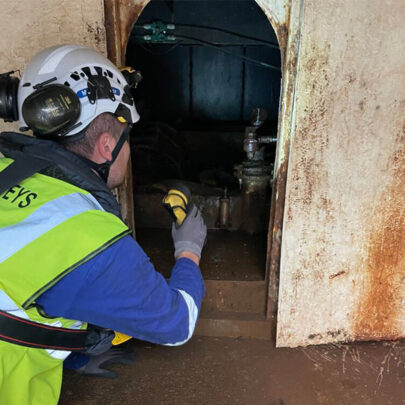
My role in the MCA is a Marine Surveyor (Ship). I have a Masters degree in Marine Engineering and a Batchelors degree in Marine Operations, with prior experience of working at sea and ashore in a large shipping company. I joined the MCA just under 1 year ago on a steep learning curve, however the support from my colleagues has enabled me to gain confidence surveying vessels of all shapes and sizes, from the smallest of fishing boats to VLCC tankers. The initial 12 months may seem daunting at first as there are a number of training courses to complete, along with questionnaires involving in-depth research into the rules and regulations governing the maritime industry, but this is broken up with practical surveys and on-the-job training which I think few career paths can compete with. I am now coming out the other end feeling confident that I can walk onto a vessel of any size or type and know what to look for when completing the required surveys or inspections.
Being based in the Glasgow Marine Office, there is a fair amount of travel involved with the job. You get the opportunity to visit small fishing villages you never knew existed and meet people from all walks of life. The role provides a great career path for someone who is ambitious and cares about safety and standards within the industry. It really feels like you are making a difference, and educating those in the industry who would like to operate in a safer and more efficient manner is very satisfying.
Due to the nature of the role, it is impossible to be a subject matter expert in every aspect, but the diverse background and experience of the surveying team in your local Marine Office, and the wider Agency, allows for numerous contacts who will assist you if necessary.
I was originally attracted to the MCA because of what their values are; safety, professionalism, trust and respect. Based on my experience of working here, I can vouch that my colleagues believe in these values and live by them in every aspect of their work and I look forward to a long and prosperous career with the Agency.
Leanne Page, Regulatory Delivery Officer
Why did you choose the MCA?
I joined the MCA over 15 years ago as a member of the Counter Pollution Branch after leaving university as I was interested in the marine environment. Through my work at the MCA and the range of work I was exposed to, my attention turned from responding when something had gone wrong and trying to minimise the impact of accidents at sea to working ensure the accidents don’t happen in the first place. The range of work available within the MCA, opportunities for progression and the support I received as a working parent has meant that I am still here after all these years.
What is the most exciting part of your job?
Representing the UK government at international meetings and negotiating to ensure that UK policies are reflected in international agreements can be exciting and rewarding. It’s exciting to know that you can potentially impact international agreements and UK law to help protect the safety of ships, people and marine environment.
What do you enjoy most about the work you do?
I really enjoy the fact that I am continually learning and being exposed to new problems that need to be solved through working closely with MCA colleagues or with external stakeholders. One of my favourite things about the job is working with international colleagues and attending meetings of the International Maritime Organisations where new ideas and approaches to maritime regulation are discussed in order to resolve any issues or problems.
What does your average working day look like?
No day is exactly the same as we are able to work flexibly. This means I can start work early and try to do a little work before the school run and then log off for half an half or so in the afternoon to pick up my children from school. I generally work from home 3 days a week and do a mix of hours depending on what is needed and my own personal circumstances; some days can be shorter and others longer. My day usually involves collaborating with MCA colleagues to help develop policy and then working on specific projects to help meet project deadlines. This can include liaising with lawyers and advising on what we need legislation to ‘do’ and drafting guidance for industry to help our stakeholders operate safely.
What is your background and how has this helped you in your current role?
I have a degree in Ocean Sciences and a Masters in Integrated Coastal Management which opened the door to the MCA for me as it enabled me to join the Counter Pollution Team. My education has helped me to better understand some of the scientifically technical aspects of environmental policy areas but it has been my experience and on the job learning that has developed my skills as member of the team able to formulate, develop, negotiate policies. All of what I know about ships and shipping has been learnt whilst working at the MCA so you shouldn’t let a lack of experience in the shipping industry put you off from applying – transferable skills and adaptability are just as important when working in a policy environment.
What kind of projects do you have coming up?
The flexible nature of my role means that I do not necessarily know what projects may be upcoming as my involvement is dependant on the needs of the other Teams within Ship Standards. This is one of the things I enjoy about the role – I can be involved in anything.
Esmé Flegg, Ship Standards
Why did you choose the MCA?
I had wanted to work for the MCA since I was a university student working on my undergraduate degree. I have a passion for both the maritime sector and policy, and wanted to work in a role where I could make a tangible and positive difference to people’s lives.
What is the most exciting part of your job?
As part of my role I research new technologies and scientific developments, working out what we can incorporate into policy updates to ensure that we are future-proofing our regulations.
What do you enjoy most about the work you do?
That I am encouraged to find ways to improve and evolve our policy to become more innovative, green and future-facing.
What does your average working day look like?
An average day includes meetings (collaborating with internal teams or with external stakeholders) and time for either researching new technological developments to include within policy, or writing policy. I am also often on training courses for knowledge and skill development.
What is your background and how has this helped you in your current role?
I have a PhD in maritime engineering and law which helped me to develop my knowledge of UK and IMO policy and regulations. Two key benefits of my PhD were the experience of writing and presenting to a diverse range of audiences, and being experienced in the need for stamina to steadily work on a single piece of policy for a significant period of time.
What kind of projects do you have coming up?
2022 is going to be an exciting year, that’s for sure! We are taking a Code of Practice to public consultation in spring 2022. Also, I will be doing a research project for new fuels and decarbonisation options for the sport and pleasure sector.
George Sorby, Senior IT Service Manager
How long have you worked for the Maritime and Coastguard Agency (MCA)?
Four and a half years.
Can you briefly describe your job role?
As Senior IT Service Manager, my job consists of the overall running of managed service providers and being a point of contact or escalation for internal stakeholders of services. I also take a hybrid approach, being a technical person, and get involved with that nature of work quite often in conjunction with service management. I’m very well known as ‘the phone guy’.
What led you to join the MCA?
I saw my original job just by chance, looking for a new challenge. When I saw it, I wasn’t sure what IT Service Management was as a whole and thought it would be good to throw myself in the deep end and learn some new skills. Since starting, I’ve managed to bag a promotion (same job, higher grade) following a few months of deputising.
What does a typical workday look like for you?
Back-to-back meetings and keeping on top of emails and Teams messages! But when I eventually get some downtime from meetings, I tend to try and attack my to-do list in order of priority.
What do you enjoy the most about your role?
The fast-paced, constant flow of work really challenges me (in a good way) and moving from task to task and onto a wide variety of different things keeps me focused. Primarily, I am a service manager focusing on corporate systems, but I find myself dipping into the blue light (999 and emergency systems) side of things, and of course, telephony!
What do you feel makes the MCA stand out as an organisation / employer?
The team we have within the MCA really makes it. Everyone is very friendly and approachable, and I’ve never worked in a place where we do so many team building activities. Things like that really makes the MCA stand out as a workplace. Also, the variety of work we do keeps the job interesting and engaging.
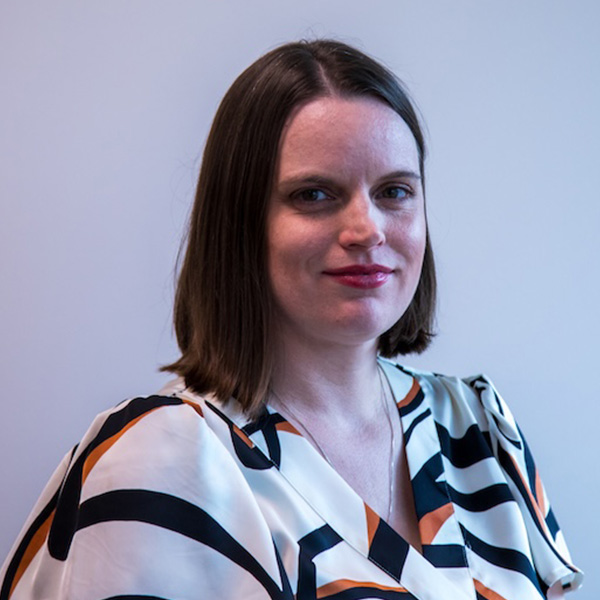
Amy Phillips, Lead Service Designer
How long have you worked for the Maritime and Coastguard Agency (MCA)?
Four and a half years as staff and one year before that as a supplier.
Can you briefly describe your job role?
I am the Lead Service Designer and head up a team of user-centred design and strategic architecture professionals. The best way to describe service design is to think about getting your passport or driving license. Those digital services are well-designed by people like us except that our services tend to be maritime-related. We also look after innovation and digital strategy which would include what services should be digitised and how we can use technology to improve both our services and how we work generally.
What led you to join the MCA? What was your career trajectory up to your current role?
I was working for a consultancy doing a series of discoveries for MCA, and they were my favourite client (by far!). When the chance came to build a team internally, I couldn’t’ resist. Back then, MCA had a strained relationship with Government Digital Service, so I came in to improve our user-centred design capability and repair the relationship by proving to them we could adhere to the Service Standard. It was my first time as a line manager, and today I feel that it is beyond line management and into practice management.
Before that, I’ve been a photographer, editor, project manager, content manager and account manager. I did a late master’s degree in User Experience Design and would be a perpetual part-time student if I could!
What does a typical workday look like for you?
It could be running a workshop. We recently did one on geospatial innovation with people in interesting roles around the organisation. It could be sitting in on research sessions with customers like seafarers or vessel owners, peer assessing services in other government departments, working with data and communications teams on our internal governance for GOV.UK citizen development tools, evaluating tenders of suppliers to build digital services, updating the Digital Strategy Group on an initiative, or a variety of team working activities. Our strategic architecture function is developing, and we are doing a lot of internal practice building as the former business analysts move into business architecture.
What do you enjoy the most about your role?
I love the variety in my role and the way I can be involved with so many different people across MCA. I also enjoy the responsibility. If we can’t clear a service assessment with the Cabinet Office, that is on me, no matter who is working on a service. I have enjoyed getting people ready for those and seeing a service thrive. My team has learnt these digital assurance skills now, which allows me to step back a bit and focus more on strategy work. I’m very proud of them. They, along with the adjacent technical architect team, are the happiest team at MCA. It would be impossible not to enjoy working with a group like that!
What do you feel makes the MCA stand out as an organisation / employer?
The MCA invests in our training and development. I’ve been to a variety of conferences and have had training in service design, business analysis, business architecture, coaching, and digital leadership. I also have time to be a cross-government assessor. Last summer, I ran an experimental games design meets policy design workshop at Civil Service Life in Cardiff. I used to be a long-term internal contractor in the US having to fund all my own training with just five days annual leave a year (yes, five). I still pinch myself that now if I see something beneficial, I can generally go. Maybe I’ll see you at DigiGov!
Kevin Knight, Finance Business Partner
What is the most exciting part of your job?
Having the opportunity to support HM Coastguard through a significant period of transformation, and being able to provide Directors with in-depth analysis and insight to help drive effective decision-making.
What does your average working day look like?
The role obviously includes the usual finance related tasks, however the role also involves me sitting on a variety of HMCG Project Boards providing key Financial input to project decisions, as well as being a member of the HMCG Senior Management Board. In addition to this, I also get to work closely with a range of HMCG Stakeholders to support them as they write Business Cases for upcoming developments and provide finance training to HMCG Budget Holders. I also act as the single point of contact for HMCG to answer any finance-related queries.
What is your background and how has this helped you in your current role?
Previous experience in both Local Government and Private Industry. This mix has allowed me to bring a range of commercial business skills to the Coastguard Finance team, whilst still having experience and an understanding of how Government Finance works.
What kind of projects do you have coming up?
HMCG are about to commence a large programme of Capital works at the Dover Maritime Rescue Coordination Centre, and I’ve been working closely with the Project team to help develop the financial case to support the work. For the last 9 months, I’ve also sat on the Project Board that oversaw the development and launch of the new digital HMCG Beacon Registry Database – this HMCG database contains vital information that assists our Search and Rescue teams when called upon.
Why did you choose the MCA?
The Maritime and Coastguard Agency, and HMCG in particular are undergoing a significant period of transformation as it seeks to keep pace with an ever changing socio-political landscape, continuous developments in technology, and changes in environmental conditions. Joining the MCA provided me with a fantastic opportunity to play a key role in this transformation.
Barbara Obrusznik, Assistant Finance Business Partner
What is the most exciting part of your job?
Definitely working for the public. I moved to the MCA from the private sector and it feels great to be focusing on creating and preserving value rather than just generating profit.
What do you enjoy most about the work you do?
The people that I work with are friendly and knowledgeable. I truly felt part of the team from the beginning.
What does your average working day look like?
There is a number of tasks that I perform throughout the month, ranging from posting journals to preparing reports for the Finance Business Partners.
What is your background and how has this helped you in your current role?
I finished AAT Level 4 last year and I am currently studying CIMA. I worked in an entry level finance role for two years prior to starting at the MCA.
What kind of projects do you have coming up?
There is still a lot for me to learn and I am really excited to be involved in anything that comes my way.
Why did you choose the MCA?
The work that the MCA does is truly spectacular and there are so many exciting things ahead. I am proud to be a part of it. There is a strong emphasis on professional development, which is very important to me. The deciding factor in applying for the Assistant Finance Business Partner position was the possibility of remote working as I am based in Scotland.
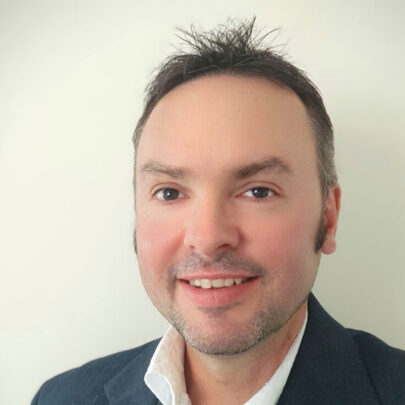
Malcolm Webb, Senior IT Service Manager
How long have you worked for the Maritime and Coastguard Agency (MCA)?
I’ve been at the MCA for eight years, serving in three different roles.
Can you briefly describe your job role?
As Senior IT Service Manager, I oversee around 13 IT support contracts. These contracts underpin the technical services our emergency services rely upon to keep people safe around the UK and beyond.
My role is to ensure we get the possible value from our suppliers. This involves listening to the needs of our end users, writing the occasional project brief, attending service reviews and identifying service risks. Out of hours, I’m a rostered Major Incident Manager, this involves leading technical teams and third parties whilst managing updates, to ensure we restore any service issues as effectively as possible.
What led you to join the MCA? What was your career trajectory up to your current role?
I studied IT at Southampton City College which eventually led me into an enjoyable six years cruising around with Carnival UK.
As I was also a volunteer for St John’s Ambulance, I was toying with the idea of moving away from IT into one of the emergency services. I completed an emergency services access course, then searched MCAs job website seeking a helicopter winchman role (a dream job). Unfortunately, I quickly realised that this role demanded a lot more medical qualifications than my voluntary experience.
However, by chance I also noticed an IT Service Desk Co-Ordinator position advertised. Keen to learn more about the MCA, I successfully applied and so the story goes.
What does a typical workday look like for you?
Mike Tyson said, “everyone has a plan until they get punched in the face”. Working in IT Operations is not quite as violent, but it certainly keeps you on your toes!
If I’m not working on a major incident, my typical day involves engaging with service owners, working with business relationship managers, processing contract renewals, highlighting service risks, undertaking service reviews as well as assisting with business as usual, incident, problem, change and release management activities.
What do you enjoy the most about your role?
Apart from lunchtime and Friday home time😉it’s about making a difference and seeing things improve. I really enjoy improving a process or implementing an improvement. If I can find a problem such as a service risk and work towards solutions by getting the best out of the right people, then I’ve had a good day.
What do you feel makes the MCA stand out as an organisation / employer?
We are the UK’s only national emergency service; this has bragging points all by itself. Furthermore, I’m not here to make myself or our leadership teams as much money as possible because there’s a greater meaning to my work.
As most of our UK trade comes in by sea, each person’s part no matter how small or big, means we are all cogs in the same big wheel. We all help to ensure the UK (and overseas territories) get what is needed to sustain the wider economy. As a result, many millions of lives are kept as safe as possible along the way.
Abhinav Chaudhary, Technical Manager
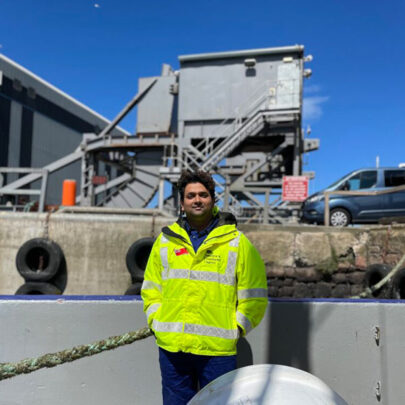
I embarked on my professional journey with the Maritime and Coastguard Agency (MCA) in 2012 as a Graduate Trainee Surveyor. Prior to joining MCA, I was engaged with a London-based firm specializing in forecasting maritime markets, marking my inaugural employment post my completion of a Master’s degree in Marine Engineering and Naval Architecture from the University of Strathclyde. Preceding this, during my undergraduate studies in marine engineering, I gained hands-on experience through a six-month stint as a trainee engineer aboard an Oil Chemical tanker, voyaging across the globe from Iran to ports in Fujairah, Rotterdam, Antwerp, China, Korea, and Taiwan.
The two years I spent as a Graduate Trainee with MCA were immensely enriching, as I had the privilege to learn from seasoned surveyors at the Glasgow Marine office. During this time I undertook training that included placements at marine offices in Aberdeen, Hull, and Belfast. I owe a debt of gratitude to my colleagues who actively supported my development during this period.
Following this, I served as a Higher Executive Officer (HEO) for a year before being temporarily transferred to assist the Aberdeen Marine Office for another year. My time at the Aberdeen Marine Office was marked by a diverse range of tasks, from conducting ISPS and MLC audits to overseeing inspections of under 15-meter fishing vessels, managing life raft service stations, and approving Port Waste Management Plans. Promoted to Senior Executive Officer (SEO), my responsibilities expanded to include training for Port State Control inspections, ISM Audits, Domestic Passenger vessels, and Safety Equipment surveys. I thoroughly enjoyed my time in Aberdeen and decided to settle in Aberdeen.
The scope of my work continued to evolve as I progressed through various professional qualifications, while simultaneously shouldering increasing workloads at the marine office. In November 2017, I successfully obtained promotion as a Principal Marine Surveyor and served in this capacity for five years. In this role, my duties encompassed activity monitoring, assessing surveyors under training, conducting performance management reviews, file reviews, certificate approvals, and handling complex tasks. I was also an integral part of the management team at the marine office.
Seeking further professional development, I participated in the Engage Development Training Programme, during which I had the opportunity to act as an Interim Technical Manager for a period of five months. Subsequently, I successfully attained the position of Technical Manager, a role I have held in Aberdeen for one year and four months.
The most rewarding aspect of my work at MCA is the continuous learning environment. Despite the demanding and dynamic nature of the job, I derive fulfilment from knowing that my team and I are contributing significantly to maritime safety in the North Sea Offshore industry, the Fishing Industry in the North East Coast of Scotland, and the safe operation of passenger vessels in Orkney and other locations within the region. As a marine office, we take pride in our role as customer service managers for a substantial portion of the UK Flag fleet, and despite having only ten qualified surveyors, we rank among the top three revenue earners within S&I.
It has been very interesting 11.5 years and I hope that it continues to remain the same. The agency has evolved for better with digitalisation, which has changed the way we do things. If a person is dedicated, hardworking, professional and has good work ethics, ability to deliver quality work and ability to drive their training and personal development and most importantly the right behaviours, then you will find MCA is the best place to work and to have a good work life balance.
In my time in MCA, the organisation has supported me in my difficult times, when I was at my low due to personal loss and during my highs. MCA as an employer sponsored my Visa which allowed me to continue to live, work and settle in the UK. The overall experience makes this place the best place to work. Not many people can say that they enjoy what they do for a living!
Claire Grace, Finance Business Partner
What is the most exciting part of your job?
Knowing that the work we are doing will help save lives.
What do you enjoy most about the work you do?
Working with a wide variety of stakeholders and partners.
What does your average working day look like?
I have found that there is not an average working day, each day is varied and different. Although of course there are set procedures and tasks to be performed at month end.
What is your background and how has this helped you in your current role?
I completed my training contract with a local firm of chartered accountants, gaining the ACA qualification, and worked my way up to Audit Manager in the 10 years I worked for the firm. I was looking for a new challenge and recently joined the MCA to become a Finance Business Partner. I have found that I have lots of transferable skills which are helpful in my new role. These include being able to communicate important financial messages to non-finance colleagues, analyse and interpret data quickly and efficiently, and challenge information presented to me.
What kind of projects do you have coming up?
I’m working on a couple of big projects that are tasked with upgrading the various IT systems and radio network infrastructure for HM Coastguard.
Why did you choose the MCA?
Living and growing up by the sea, I know how important it is to help prevent loss of life at sea and on the coast. It is a privilege to be part of an organisation that carries out this important work. There are also great benefits on offer at the MCA including a fantastic pension scheme, flexible working arrangements and a generous holiday allowance.
Nikki White, Deputy Finance Business Partner

What is the most exciting part of your job?
Being relatively new to MCA and the Civil Service, I am still finding my feet. However, I am finding that I am able to use my skills from previous roles and enhance on them within the work I do. There is still a lot for me to learn and that makes for a very exciting journey.
What do you enjoy most about the work you do?
What I enjoy most about my work is being able to add value and learn at the same time. There is still so much for me to learn and pick up from my manager, that there hasn’t been a day that I haven’t enjoyed being at work.
What does your average working day look like?
I like to start work early as I have several reports I have to run each week and I find the systems work a little quicker early in the morning when not so many people are online. I spend a day and a half creating reports for all the Marine Offices, and helping them with any queries they have around time-sheets and work orders. I also support my line manager with any ad hoc work he needs me to support him with.
What is your background and how has this helped you in your current role?
I am a part qualified accountant with over 20 years experience within Financial, Commercial Management and Business Partnering. Within my various roles I have delivered value for money through appraising financial reporting and streamlining the way in which spend is reviewed and monitored against budget. My roles as Programme Business Partner and Senior Finance Business Partner has required me to work collaboratively across the whole business, where I have had to obtain input from several departments and a wide variety of staff. I have been able to bring my skills to the MCA and use them to start to streamline some of the reporting and work with Management and the business leads to understand the requirements they have.
What kind of projects do you have coming up?
I am very excited to be able to start to streamline the Time-sheet and Work Order reporting using my skills within Excel and PowerBi to create Dashboards and more visual reports for the Management and Business Leads of the Marine Offices. This will hopefully help more to understand the reports and give them useful data in a more user friendly way.
Why did you choose the MCA?
I first joined MCA on a 6 months fixed contract, and was unsure if there would be an opportunity to become and permanent member of staff. When I started I was made to feel very welcome and everyone is so helpful. Luckily, my role was advertised as a permanent position, and I decided that I really wanted the go for it, which I did and got the role. I have found that there doesn’t seem to be any split between Management and staff which is very pleasant as everyone is willing to support and help you no matter how small or silly the question may be.
Rob Townsend, Digital
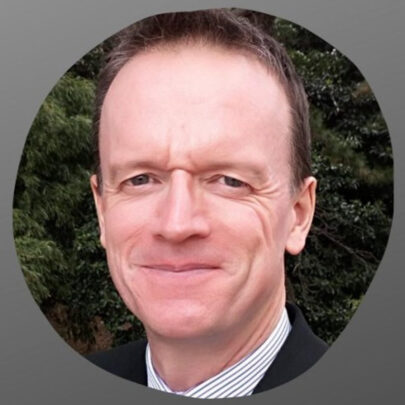
Robert Townsend. Senior Technical Architect (Radio and Telecoms). 15 years as a ships radio and electronics officer in the Merchant Navy. I joined the Maritime and Coastguard Agency in January 2006 initially in the radio and navigation standards and policy unit, but moved to IT in 2007 in order to deliver frontline services.
I liken IT to the “Engine Room” of a ship in that we are an enabling unit for all operational and support functions which means I get to work with people all over the Agency. Previous to my current role I was Head of Coastguard Technology Services which had a diverse array of subject matter ranging from securing site access for engineers to one of our unmanned remote radio sites, managing telecoms projects, replacing 30m radio towers and presenting a Business Case to a Management Board. In my current role as a Senior Technical Architect, I am service owner for various radio and telecoms systems such as radio towers and telephony with a remit to roadmap our services and systems and to design future services, many of which must align to international mandate.
Working for the MCA presents numerous opportunities for contributing to the provision of quality public services as well as working with all sorts of people with their own unique backgrounds, skills and experiences.
We have an engaging ethos and a team spirit which nurtures talent and which provides career paths in a challenging but ultimately rewarding arena. You get an enormous sense of pride when you hear about the successes of our front line services such as HM Coastguard, Counter Pollution and Survey Branch.
The array of subject matter is one of the chief attractions. We have numerous areas of responsibility all of which ultimately contribute to maritime safety. I have spent time at the DfT in London, attended IMO sessions, undertaken project work from the northern most tip of the Shetland Island to the Scillies and have attended international conferences worldwide. I have undertaken numerous training courses that have significantly enhanced my career – covering technical and architecture as well as project and programme management.
Rachel Chenery, Support Lead and Problem Manager
How long have you worked for the Maritime and Coastguard Agency (MCA)?
I began working at the MCA as a contractor in November 2022 and transitioned to a permanent role in February 2024. I’m really enjoying my new position and learning more every day – it’s a fantastic place to work.
Can you briefly describe your job role?
I am the Support Lead and Problem Manager at the MCA, where I work closely with the incident manager to oversee the service desk and focus on problem management. My role in problem management involves investigating the root causes of issues and collaborating with colleagues and third parties to find solutions. This ensures that problems impacting multiple users are resolved quickly. In managing the service desk, I strive to ensure that all services are delivered to the highest standard. I take great pride in the support my team and I provide to the MCA and am always happy to assist with any queries.
What led you to join the MCA? What was your career trajectory up to your current role?
I wanted to support an organisation that helps people and I deeply admire what the MCA stands for. Before joining the MCA, I spent nearly 10 years as a second / third line engineer for a recruitment agency and a year prior to that at a local college. After having my children, I decided to step away from IT and took on a part-time admin role with the NHS. However, I quickly realized that IT was where my passion truly lies. When I saw a contract role open at the MCA, I knew it was the perfect opportunity to return to the field and I haven’t looked back since.
What does a typical workday look like for you?
In my role, I support the service desk, ensuring they have everything needed to resolve incidents and requests as the first point of contact for IT. My job is diverse, with no two days being the same, which I really enjoy! It ranges from coordinating with third-party vendors to arranging training, creating processes, and assisting with incidents. Additionally, I manage multiple problem boards each month, working with various third parties and internal colleagues.
What do you enjoy the most about your role?
I thrive on helping people and ensuring that everything we do makes a difference, whether it’s providing a replacement headset or resolving a persistent issue with key software – it all matters. I enjoy working with a diverse group of individuals across various roles within the agency. It’s fascinating and incredibly fulfilling to play a part in helping them get their work done when something goes wrong.
What do you feel makes the MCA stand out as an organisation / employer?
The level of support here is truly remarkable – everyone is eager to help and collaborate, creating a great atmosphere. It makes coming to work a joy, and I genuinely enjoy what I do. I also appreciate the flexibility, which allows me to balance my career with my family life. With two young children, it’s wonderful to work in a place that is so understanding and supportive, enabling me to have both a fulfilling career and a family life.