

Will
There are three areas that you have to split your time between in the Tax Specialist Programme (TSP): managing your cases, recording evidence of your development and reflecting on what you’ve learned, and doing your formal learning and sitting exams. At the moment, my colleagues and I are each managing several live tax cases, spanning a range of tax heads. These follow the same broad structure – you perform an initial risk check, send out opening letters and request information and documents, analyse the documents and then follow up your findings with the customer – but they’re all at different points.

I will normally do a couple of tasks from these each day – for example, writing a letter to a customer or meeting with a colleague to get advice on a technical problem. For every learning topic in Stage 1, you have a theoretical class, a practical class and a peer-to-peer consolidation class. These last a few hours each and go over material that you’re set to read each week from HMRC’s technical manuals. I also allocate time to preparing for these sessions, attending them and then going over my notes.

Ella
No two days or weeks look the same. The flexibility of TSP means I can structure my time in a way that works best for me while balancing my tax cases, study, and other responsibilities.
When I have timetabled study, I like to schedule my theory and practical sessions on the same day where possible. I usually try to do this on a Tuesday, which allows me to start the week with reading and self-study before putting that learning into practice. Throughout the rest of the week, I balance my tax cases around any additional learning opportunities, such as peer-to-peer learning sessions, meetings, and training.
The hybrid working model also gives me the flexibility to choose where I work depending on the task at hand, while meeting the requirement to work at least three days a week in the office.
For example, I tend to do a lot of my learning in the office, as it’s easy to speak to colleagues, ask questions, and learn from those around me. If I’m focusing on a piece of a tax case that requires uninterrupted concentration, working from home can be equally beneficial.
I tend to finish the week focusing on my tax cases, as I find it keeps me engaged and allows me to apply the knowledge I’ve developed throughout the week. The balance between live tax cases and ongoing learning is one of the things I enjoy most about the programme, as it means I’m constantly developing while gaining practical experience.
I also really value the focus on wellbeing. We’re encouraged to take breaks where possible and I appreciate the flexibility to take annual leave when needed to rest and recharge. This helps me maintain a healthy balance between work, study, and life outside of work, and allows me to perform at my best.
Lea
One of the things I enjoy most about the TSP is the variety. No two weeks are the same, and my time is usually split between tax cases, training, self-study and working with colleagues.
A typical day might involve reviewing tax cases, carrying out research, attending team meetings and discussing technical issues with colleagues. Alongside this, there are training sessions and dedicated time for self-study, which helps me build my knowledge and develop my understanding of the work we do.
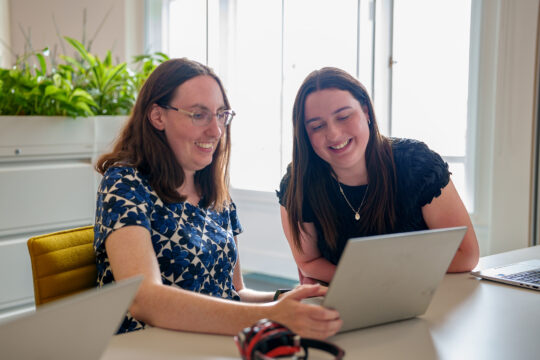
Balancing these different responsibilities requires good organisation, but it also means there are always opportunities to learn something new.

Agnia
A typical week on the TSP can vary significantly. Some weeks are centred around formal learning and assessment preparation, while others are more focused on tax cases or taking part in volunteering opportunities.
One of the key aspects of the programme is developing the ability to reprioritise at short notice, although you’re never left to figure things out on your own, there’s always support available from managers and even other colleagues.
The combination of flexibility and support allows us to balance learning, assessments, tax cases, and wider opportunities when they arise.
Holly
A typical day involves analysing information, both numerical and non-numerical, to build a comprehensive picture of a business, its finances and, ultimately, its tax liabilities. We speak to a range of customers, keeping in touch as we progress their cases, and get to learn about many different businesses and individuals in the process.
I like to block out dedicated study time in my calendar to ensure I have reserved time for learning alongside my other responsibilities.
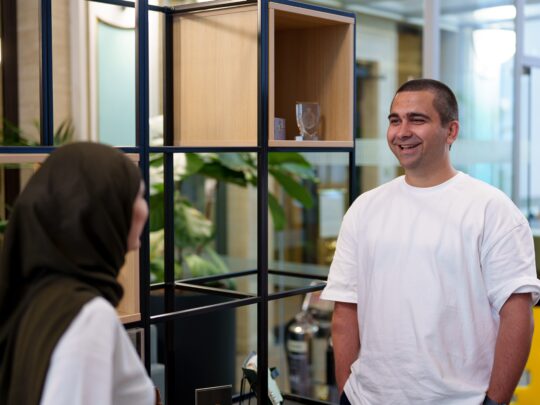
Other priorities can arise unexpectedly, and it can be tempting to focus only on tasks that need immediate attention. Learning how to schedule work effectively and accept that some items will remain on the to-do list for a while is vital. I make a conscious effort not to lose sight of the importance of the time I’ve reserved for learning.
Start a career that grows with you at HMRC
Join the Tax Specialist Programme and thrive in a work culture that celebrates your whole self.
Applications are opening on 9 October 2026.
Start your HMRC journey today by looking at the vacancies we have available.
Discover more about what we do, our business areas and life at HMRC.
Ask our employees questions for an insight into what it’s like to work at HMRC.
Return to our Tax Specialist Programme page to read more.