

Become a driving examiner and make a real difference to road safety in Great Britain.
What does a driving examiner do?
As a driving examiner, you assess whether learner drivers have the skills to drive safely on their own.
You will observe each customer’s driving ability, decision-making and hazard awareness, then make a fair judgement on whether they’re ready for the road.
After each test, you will give clear, detailed feedback and complete an accurate report to explain the result. Sometimes you will share disappointing news. Other times, you will be part of a life-changing moment. Whatever the outcome, your role is to help people begin a lifetime of safe driving.
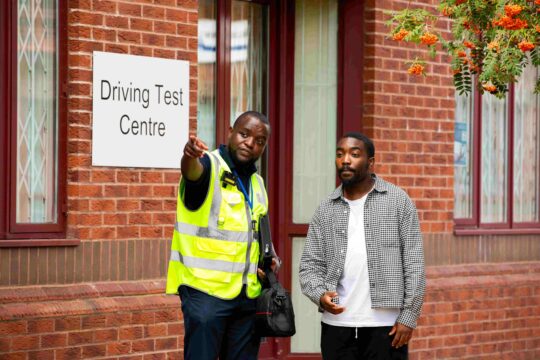
How do I become a driving examiner?
A successful driving examiner needs to be a keen observer, with strong customer service and communication skills to interact professionally with people from all walks of life. Your role is to make objective decisions that protect the safety of all road users. You must be able to communicate clearly and calmly, especially when giving instructions or feedback, while adapting your approach to suit individual needs. As many customers will feel nervous, it is essential to remain patient, approachable and reassuring, helping to put them at ease without compromising professionalism. Staying calm under pressure and maintaining a composed, fair and objective manner are key to creating a positive and supportive testing environment.
Essential requirements
- You must be over the age of 23
- You must have a full UK manual driving licence for at least 3 years
- You must not have more than 3 penalty points on your driving licence
Our selection process ensures a comprehensive assessment for each applicant’s skills and potential fit for the role. There are four stages involved and you must be successful at each stage to progress to the next:
Stage one – application form
You will need to complete an online application form on Civil Service Jobs outlining your previous work experience.
Stage two – online assessment exercise
After completing your application form, you will be invited to undertake two online assessments that you complete in your own time.
The first will be a customer service exercise. It is designed to assess how you communicate with customers, provide excellent customer service and maintain professional standards at all times.
The second will be an observation and reporting exercise. It will test your ability to recall important details, apply criteria accurately and produce a clear record of your findings.
Your scores from both assessments will be combined to decide whether you move to the next stage.
Stage three – online interview
You will be invited to attend an online interview via Microsoft Teams. You will be assessed against the following behaviours, more information on these can be found in the job advertisement.
- Communicating and Influencing
- Managing a Quality Service
- Making Effective Decisions
You will also be assessed against selected Civil Service Strengths.
Stage four – driving assessment
Your driving ability assessment will last approximately 45 minutes. During that time you will be asked to complete:
- An eyesight check
- One reverse manoeuvre
- Drive independently for approximately 20 minutes
- Approximately 5 minutes of talk through
To be successful, you will need to demonstrate consistent, safe and well-planned driving. This includes anticipating potential hazards early, positioning your vehicle correctly and showing good judgement in your decisions. You must maintain full control of the vehicle throughout. We are looking for a standard that goes beyond basic driving ability. The aim is to complete a safe, smooth, and well-planned drive from start to finish, with consideration for fuel efficiency and overall road safety.
To be successful, you will need to demonstrate consistent, safe and well-planned driving. This includes anticipating potential hazards early, positioning your vehicle correctly and showing good judgement in your decisions. You must maintain full control of the vehicle throughout. We are looking for a standard that goes beyond basic driving ability. The aim is to complete a safe, smooth, and well-planned drive from start to finish, with consideration for fuel efficiency and overall road safety.
Video transcript unavailable
Driving examiner training
Your training to become a driver examiner lasts six weeks and combines practical experience with structured learning to fully prepare you for the role.
Training is delivered on a full-time basis, Monday to Friday, throughout the six-week period.
The first week will take place at your local driving test centre. Weeks two to six will be completed at a regional training centre, where accommodation and expenses will be covered by DVSA for the duration of your training.
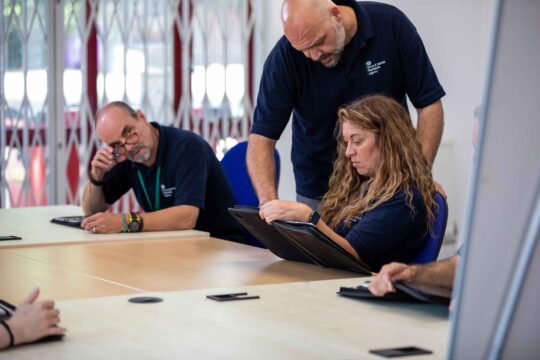
“The training is challenging, for a good reason, but it was also genuinely enjoyable. I felt supported every step of the way by a fantastic team that’s not only incredibly knowledgeable, but approachable”
Leanne Kapa, a newly qualified driving examiner
Benefits of the role
Each driving test conducted helps to bring learner drivers closer to the opportunities that define their lives.
While the role is genuinely rewarding, it can also sometimes be challenging. You’ll need to deliver difficult news with care and professionalism, stay consistent under pressure and maintain high standards at all times.
Whether you are starting out in your career, changing roles or returning to work, the driving examiner role is an excellent opportunity to shape the future of road safety in Great Britain.

In return, our driving examiners benefit from:
- Civil Service Pension with an employer contribution of at least 28.97%Civil Service Pension with an employer contribution of at least 28.97%
- 25 days annual leave, increasing by 1 day each year of service (up to a maximum of 30 days annual leave), plus 8 bank holidays a privilege day for the King’s birthday
- flexible working options, including part-time working once training is completed
- learning and development opportunities
- health and well-being support – from 24/7 Employee Assistance Programme to free eyesight tests and flu jabs
Would you like to find out more about the role, get tips on the application process and ask questions to the team directly?
Different backgrounds. Different journeys. One rewarding career.
“I think the DVSA is a great place to work and the DfT as a whole. I feel valued and trusted in my job by management. DVSA promotes a well-rounded working culture in which everyone is respected and I get to work with great people from all different backgrounds…”
Nick Kimber
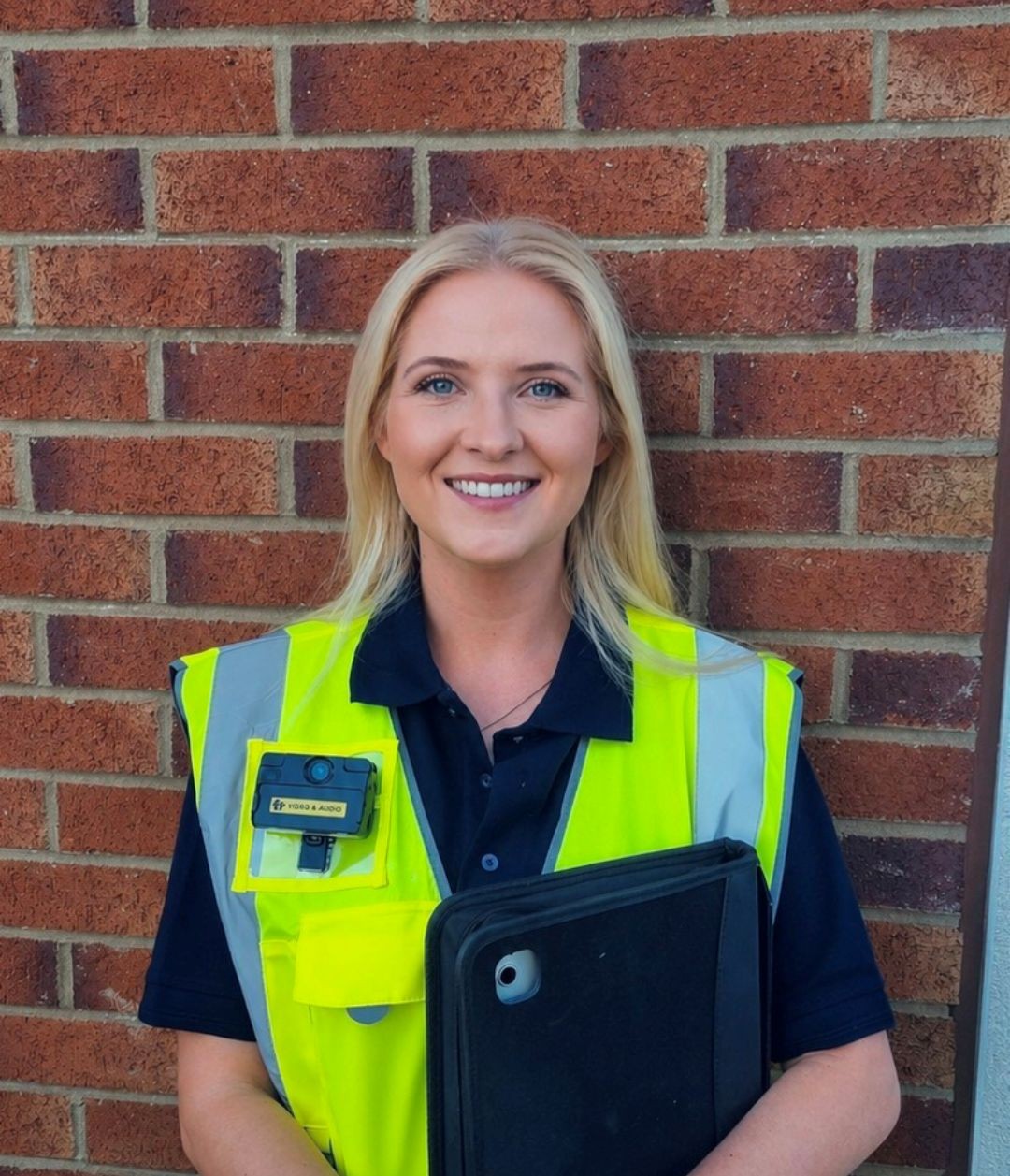
“Stepping into a role where you don’t often see many young women has made the experience even more meaningful for me. It’s great to be part of changing that picture, and to show that there’s space for anyone to thrive in this career.”
Leanne Kapa

“There are many opportunities for professional development and growth, as well as flexibility within the role! It’s very rewarding to know that my work improves peoples’ lives, as well as directly contributing to the safety of our roads.”
Stuart Deal
Interested in becoming a driving examiner? Apply now and make a real difference to road safety in Great Britain
Find out more about working for DVSA
You can find out more about working for us, including all the other benefits we have to offer, by using the links below: