
What to expect next
The recruitment process, and what evidence is asked for, varies depending on the job you are applying for.
After you submit your application form, you’ll be invited to some of the following recruitment stages:
- online tests
- video interview
- final interview
- assessment centre
Online tests
When you apply for a job in the Civil Service, we may assess you using a psychometric test. Tests are an effective way of assessing people fairly, consistently and transparently. You may be asked to complete one or more of these – we’ll say whether this is the case on the job advert.
There are 7 commonly used tests:
– Civil Service Verbal Test (Verbal Test)
– Civil Service Numerical Test (Numerical Test)
– Civil Service Judgement Test (Judgement Test)
– Civil Service Management Judgement Test (Management Judgement Test)
– Civil Service Work Strengths Test (Work Strengths Test)
– Customer Service Skills Test (Customer Service Test)
– Casework Skills Test (Casework Test)
You can find out more about online tests, including practice tests and reasonable adjustments, on GOV.UK
Video interview
Some recruitment stages include a video interview, rather than over the phone or in person.
There are two types of video interview:
– a regular face-to-face interview in real-time via a video feed
– a pre-recorded interview where you will be asked to pre-record answers in response to interview questions presented to you via an online platform.
Final interview
Part of the assessment process will usually involve an interview. Generally, this will be face-to-face in person or via video.
The purpose of all interviews is the same: to assess your suitability for the job. An interview will usually last 45-60 minutes and you may be asked to describe specific occasions when you have demonstrated a certain skill or behaviour.
Before you attend an interview, look carefully at the job description and think about examples you can give of times when you have previously demonstrated the behaviours outlined. You may also wish to consider how you would handle similar situations in the future.
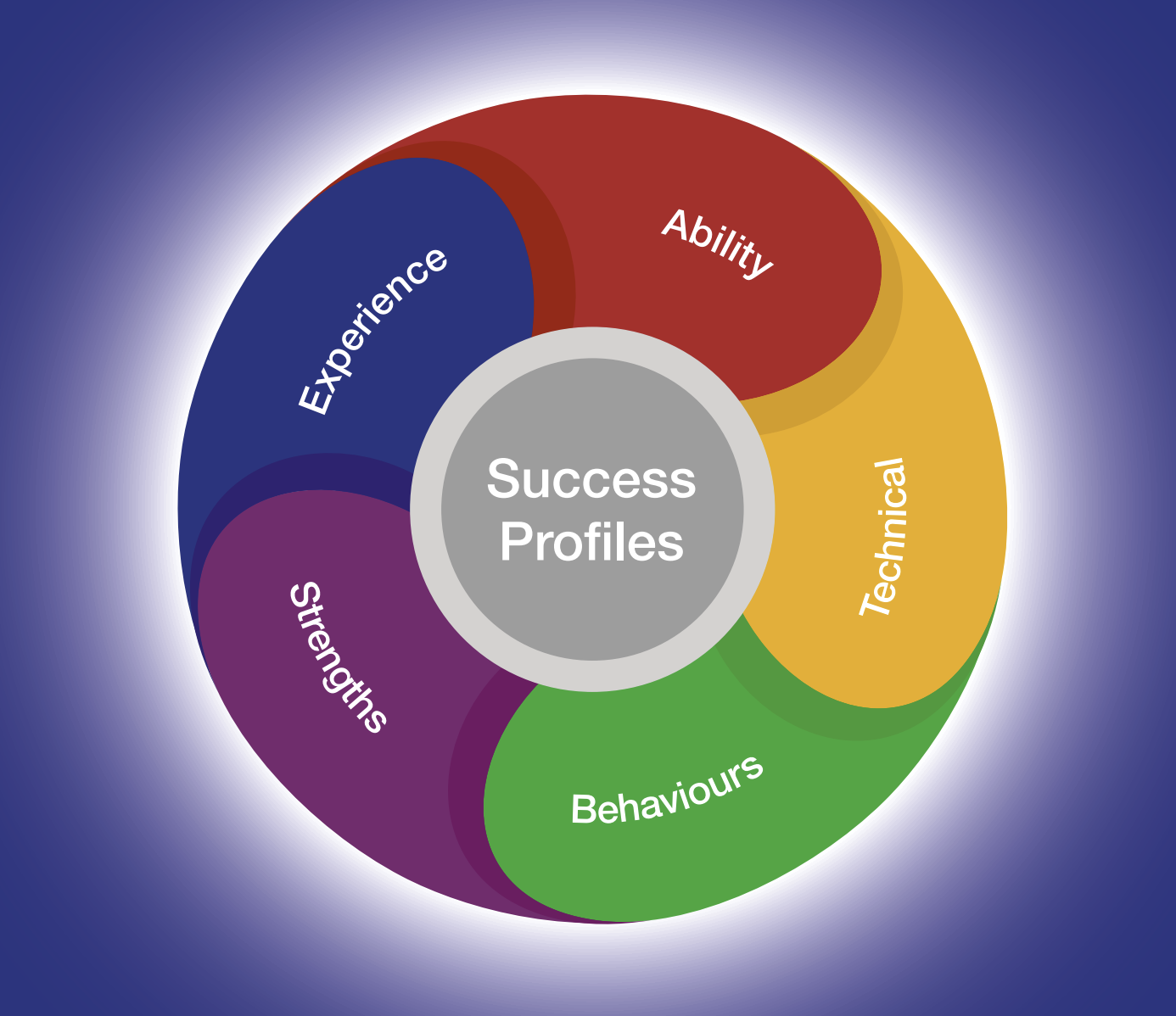
You may also be asked questions about what interests you and what you enjoy doing. These questions will help the interview panel assess your strengths and preferred style of working. Strengths are one of the Success Profiles elements.
Before the interview, it would be helpful to reflect on what you feel are your personal strengths and preferred ways of working.
Assessment Centre
An assessment centre will usually consist of a combination of different selection methods, such as an interview, a presentation, a written exercise and/or a role-play exercise.
Details of which selection methods will be used and what to expect on the day will usually be given in the letter inviting you to the assessment centre.

Feedback
Once you’ve completed the recruitment process, we will let you know the outcome.
At this final stage, we encourage you to ask for feedback, regardless of the outcome of your application, as this can help you in the future.

Show video transcript
- Recruitment in the Civil Service is about finding the right person for each specific job vacancy. This is how we recruit. We have 5 elements we can draw on to help us recruit though we may or may not use all of them at the same time.
- The elements are behaviours – your opportunity to show the activities and actions you have or would take to demonstrate you are the best person for the role. Strengths – the things you do regularly, do we and motivate you. It allows you to talk about what you enjoy, what you do best and will build a more rounded picture of you as a person. Experience – asks you to demonstrate a knowledge or mastery of a specific work area. Ability – measures your current or future potential to carry out the skills needed for the role. Technical – this requests a key professional skill, knowledge or qualification relevant to the role.
- Each advert will show which elements are included. Depending on the needs of the vacancy the manager will select one or more of these elements for their process. Depending on the vacancy you may see 1, 2, or more of these assessment methods
- These are some of the things we may expect from you. A CV – there is no set way to present your CV. You should include information about your career history and try to tailor the information to make it relevant to each role you are applying for. A personal statement – you will normally be asked to provide a personal statement to go with your CV. You should show how well you meet the essential criteria. This should include evidence of the behaviours, experience and technical requirements in the job advert.
- Application form – you may be asked for a basic career history. Explain why you are interested in the job and how you think you would be a good fit. You should provide examples of how you meet the essential criteria, behaviours, experience and technical requirements for the job. There will be a word limit so take time to structure the information carefully.
- Online recruitment tests – we most often use two specific tests. The verbal reasoning test which tests your ability to comprehend what is being said to you and to understand written information, and the numerical reasoning test which tests the ability to understand and use numerical information. These give a fair assessment of skills needed for the role. There is no specialist knowledge or experience needed.
- Presentation – the subject could be given to you in advance or it could be given to you on the day. You might be given some extra materials to help you prepare. It is also likely you will be asked further questions about your presentation. These could be about the subject matter, or about the way in which you prepared for it. Interview – these are most often face to face but can be over video. The questions will focus on the role and how well your skills match the job role. You could be asked questions relating to strengths, behaviours, experience or technical requirements. The most important thing is to be yourself. Take the opportunity to show yourself in the best possible light.
- Assessment centre – this will usually be a combination or different methods. These could include online recruitment tests, presentations and interviews. They can be a full or half day. Reasonable adjustments can be made for any element of the assessment process. If you have any worries or concerns about the way the assessment will affect you, please get in touch with the vacancy holder. Every effort will be made to make adjustments to make things work for you.
- Here is an example of how the recruitment process might work from start to finish. You see a vacancy on Civil Service jobs that suits your skills and career goals and you decide to make an application. The job advert outlines what the job will entail and what criteria the line manager is looking for in their preferred candidates. It states they will be assessing behaviours, strengths and ability as part of this process. The job advert states that you should submit a CV and personal statement. Once you submitted this you will be sent a link to carry out the online ability test for verbal reasoning.
- You are successful at the verbal reasoning test and your CV and personal statement have made it through the sift. You are invited to an interview, at the office where the job would be based. You will be interviewed by 3 people. They will ask you questions relating to the most important strengths for the job and about the behaviours listed in the job advert.
- You will answer the strengths questions with your genuine first response. You answer the behaviour questions with well structured and considered examples of how you have or would behave in the given situation. Following the interview you receive confirmation that you have been successful. Congratulations! It is unlikely that any two recruitment exercises for different jobs will be done in the same way. Each recruitment campaign will be tailor made to get the right person for the job
- Don’t worry. Just follow the instructions that are in the job advert and given to you throughout the process. You can find out more information about recruitment in the Civil Service on the careers website or on gov.uk.
How we recruit

How to write your CV
For some jobs, you will be asked to provide a CV (curriculum vitae) as part of your application. Here you can find information on how to write the best CV.

How to write your personal statement
For some jobs you’ll be asked to provide a personal statement or statement of suitability. Find out how to stand out.

Demonstrating behaviours
Behaviours are the things that people do that result in effective performance. Read more about the behaviours we use to assess you.

Civil Service Success Profiles
The Civil Service recruits using Success Profiles. This means that for every role, we consider what you’ll need to demonstrate to be successful.